
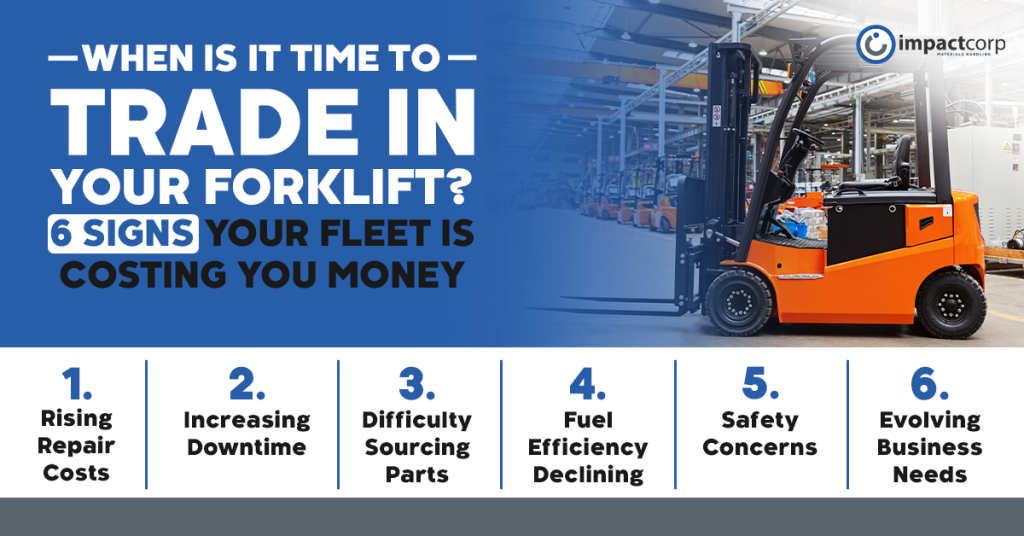
When Is It Time to Trade In Your Forklift?
A forklift is one of the hardest-working assets in any warehouse, factory, logistics operation, or agricultural business. With regular servicing and maintenance, many forklifts can provide years of reliable performance. However, there comes a point where keeping an ageing machine on the floor begins costing more than replacing or upgrading it.
Many businesses continue investing in repairs simply because the forklift still operates. Unfortunately, the hidden costs of downtime, reduced productivity, higher fuel consumption, and increasing maintenance bills often outweigh the cost of upgrading.
So, how do you know when it’s time to move on?
Here are six signs your forklift could be costing your business more than it’s worth.
Rising Repair Costs
Every forklift requires maintenance throughout its lifespan, but there’s a difference between routine servicing and constant repairs.
If your forklift seems to be spending more time in the workshop than on the warehouse floor, it’s worth asking whether the money you’re investing could be better spent elsewhere.
Common signs include:
- Frequent hydraulic repairs
- Engine or transmission failures
- Electrical faults
- Constant tyre replacements
- Repeated oil or hydraulic leaks
When repair costs become a regular monthly expense rather than occasional maintenance, it may be time to consider a forklift trade-in.
Increasing Downtime
A forklift that isn’t working isn’t making your business money.
Unexpected breakdowns can delay production, interrupt warehouse operations, postpone deliveries, and reduce overall productivity. Even a few hours of downtime can have a ripple effect across your operation.
Ask yourself:
- Are operators regularly waiting for equipment?
- Have breakdowns become more frequent?
- Are deadlines being affected?
Reliable equipment is an investment in productivity.
Replacement Parts Are Becoming Difficult to Source
Older forklift models often become more expensive to maintain as replacement parts become harder to find.
Long lead times for components can leave your forklift out of service for weeks, increasing downtime and disrupting operations.
If your technician frequently struggles to source parts or recommends discontinued alternatives, your forklift may be reaching the end of its practical service life.
Fuel Costs Keep Increasing
As forklifts age, they naturally become less efficient.
Older diesel and LPG forklifts often consume more fuel while delivering less performance than newer models. Even electric forklifts can become less efficient as batteries age and operating systems wear over time.
If your operating costs continue increasing without an increase in productivity, upgrading your equipment may provide significant long-term savings.
Safety Is Becoming a Concern
Safety should never be compromised to keep an ageing forklift operating.
Signs that your forklift may present a safety risk include:
- Excessive mast wear
- Poor braking performance
- Hydraulic leaks
- Steering problems
- Reduced lifting stability
- Structural corrosion or damage
Not only do these issues increase repair costs, but they also place operators and surrounding employees at risk.
Regular inspections and preventative maintenance can identify many of these issues early, but sometimes replacing the equipment is the safest and most cost-effective option.
Your Business Has Changed
The forklift that suited your business five years ago may no longer meet today’s operational requirements.
Perhaps you’ve:
- Expanded your warehouse
- Installed higher racking
- Increased production
- Begun handling heavier loads
- Moved into indoor warehousing
- Opened a second facility
As businesses grow, their material handling requirements change too. Upgrading to equipment better suited to your current operation can improve efficiency, reduce operating costs, and increase productivity.
Should You Trade In, Restore, Rent or Buy?
Every business is different, and there isn’t a one-size-fits-all solution.
Trade In
If your forklift still retains value but no longer suits your operation, a trade-in can help reduce the cost of upgrading to newer equipment.
Restore
If the forklift is structurally sound but showing signs of cosmetic wear or mechanical fatigue, professional restoration may restore reliability and extend its working life at a significantly lower cost than replacement.
Rent
If your workload is seasonal, project-based, or your business requires flexibility, short-term or long-term forklift rentals can provide reliable equipment without the upfront capital investment.
Buy
For businesses with consistent, long-term material handling requirements, investing in a new or quality used forklift often delivers the best long-term return while providing modern technology, improved efficiency, and greater reliability.
How Impact Corp Can Help
At Impact Corp, we don’t believe in recommending the most expensive solution, we recommend the right solution.
Our experienced team will assess your existing equipment, operational requirements, and future growth plans before helping you decide whether it’s better to:
- Continue servicing your forklift
- Refurbish your existing equipment
- Trade in your current forklift
- Purchase a new or used forklift
- Choose a long-term rental solution
Whether you’re operating in Durban, Ballito, Richards Bay, or anywhere along the North Coast, we’re committed to helping businesses maximise productivity while minimising unnecessary operating costs.
Is Your Forklift Costing You More Than It Should?
If you’re experiencing frequent breakdowns, rising repair bills, or increasing downtime, now may be the perfect time to review your fleet.
Contact Impact Corp today for expert advice on forklift trade-ins, refurbishment, servicing, rentals, and new or used forklift sales. We’ll help you find the most cost-effective solution to keep your business moving.
Our Services
Latest Post
Ready to find the right forklift for your operation?
Contact Impact Corp today for expert advice, reliable equipment, and solutions tailored to your business.